Planetary Motion in 3D
3D Coordinate System
• Space is defined using X, Y, Z axes
• Objects are positioned in world space
• Camera movement does not change object coordinates
Manda–Saṁskāra
(Calculation of Manda-Sphuṭa)
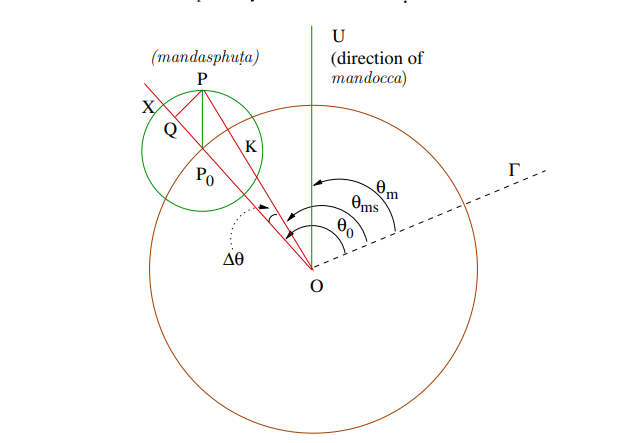
The manda-sphuṭa is the true longitude of a planet obtained by applying the manda-saṁskāra (equation of centre) to the mean longitude.
θms = θ0 − Δθ
The correction Δθ depends on the manda-kendra:
θ0 − θm
From epicycle geometry:
R sin Δθ = (r₀ / R) · R sin(θ₀ − θm)
This construction explains the non-uniform motion of planets in the traditional Indian astronomical model.
Epicycle and Eccentric Models
This scene visualizes the geometrical construction used to obtain the manda-sphuṭa.
• Mean planet P₀ moves uniformly on deferent
• Epicycle centered at P₀ with radius r
• Direction OU represents mandocca
• True planet P obtained by parallel shift
Both epicycle and eccentric constructions are mathematically equivalent.
Śīghra–Saṁskāra
(Geocentric Correction)
Śīghra-saṁskāra transforms the manda-sphuṭa (heliocentric longitude) into the true geocentric longitude of the planet.
The correction depends on the śīghra-kendra:
σ = θs − θms
From triangle EPS:
sin(θ − θms) =
(rs sin σ) /
√[(R + rs cos σ)² + rs² sin² σ]
This construction explains how Indian astronomy converts heliocentric motion into observable geocentric motion.
Manda and Sighra Corrections
The traditional Indian planetary model applies two major corrections: Manda correction and Sighra correction. These corrections explain the non-uniform motion of planets and convert mean planetary motion into true observable motion.
Manda Correction
Sighra Correction
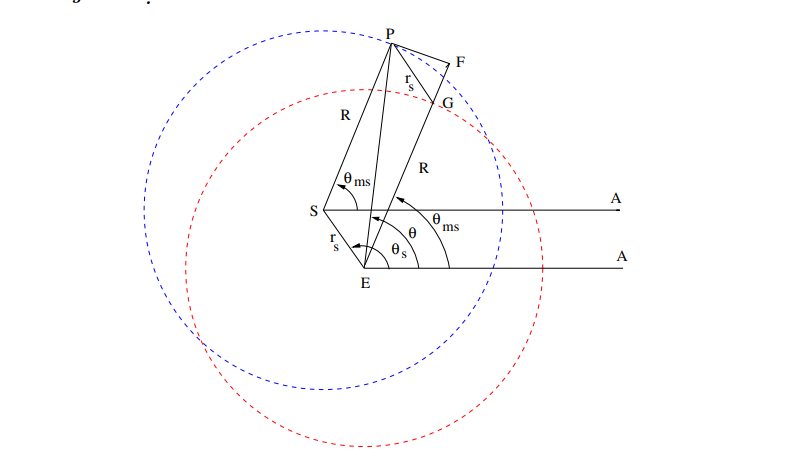
The first diagram shows the geometric construction for the manda-sphuṭa using an epicycle model. The second diagram shows the śīghra correction, which converts heliocentric longitude into geocentric longitude.
Nilakantha’s Cosmological Model
In the 15th century, the Indian astronomer Nilakantha Somayaji proposed a remarkable revision of the traditional planetary model. In this system, Mercury and Venus move around the Sun, while the Sun itself moves around the Earth. The outer planets Mars, Jupiter, and Saturn also orbit the Sun but are observed geocentrically from Earth.
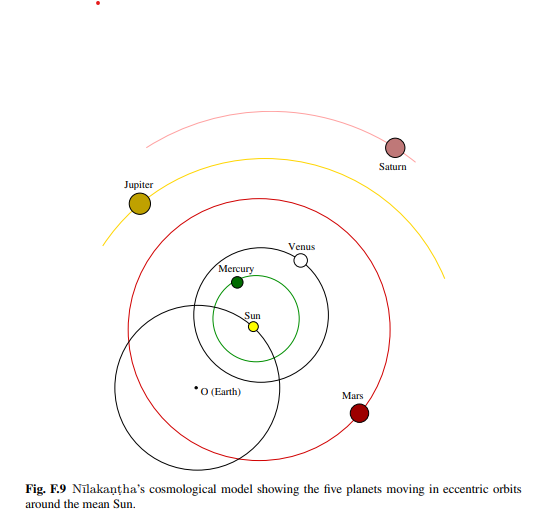
Fig: Nilakantha’s cosmological model showing planets orbiting the mean Sun.
This model effectively combines geocentric and heliocentric ideas. The Earth remains at the center, while planetary motion is explained through epicycles and eccentric orbits around the Sun. Remarkably, this approach anticipates later developments in astronomy and approximates the heliocentric understanding of planetary motion.
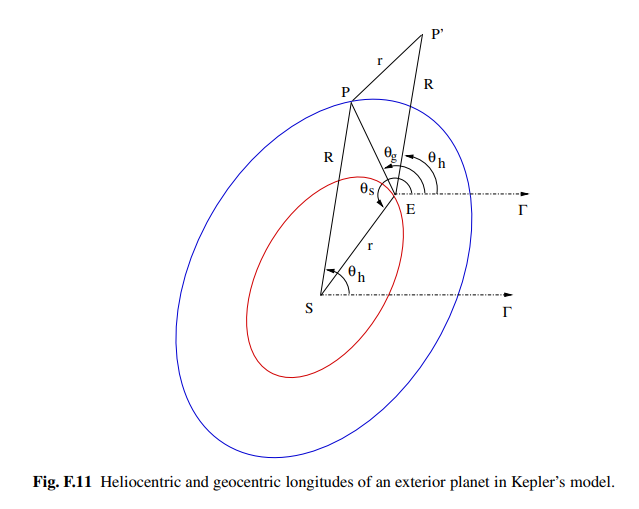
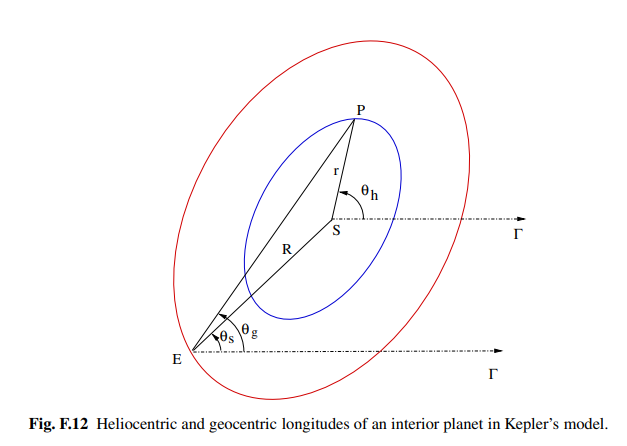
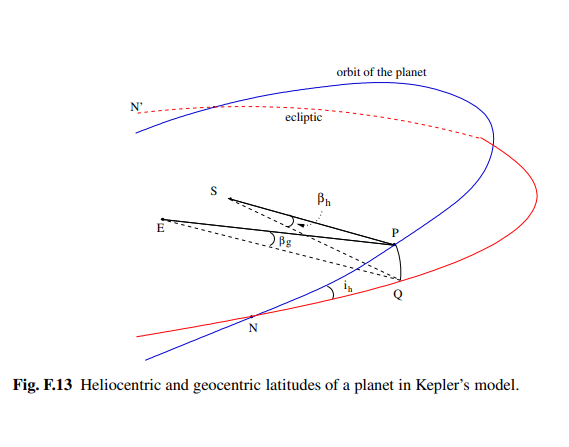
Keplerian Model of Planetary Motion
The Keplerian model describes planetary motion using three fundamental laws discovered by Johannes Kepler in the 17th century.
Kepler’s Laws
1. Law of Orbits: Planets move in elliptical orbits with the Sun at one focus.
2. Law of Areas: A line joining a planet and the Sun sweeps out equal areas in equal times.
3. Law of Periods: The square of the orbital period is proportional to the cube of the semi-major axis.
T² ∝ a³
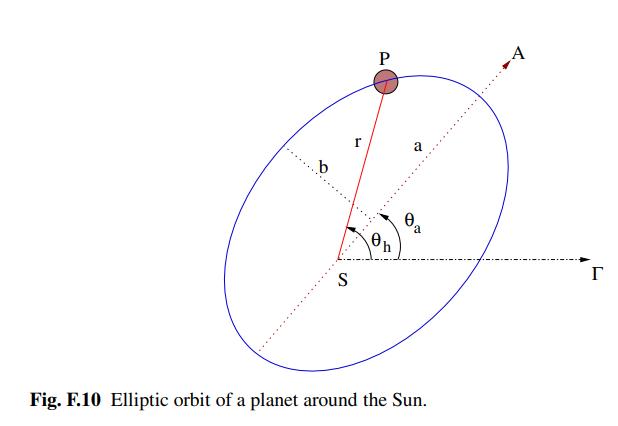
Equation of Elliptical Orbit
r = l / (1 − e cos(θh − θa))
where:
• e = eccentricity
• θh = heliocentric longitude
• θa = aphelion longitude
Equation of Centre
θh − θ0 = −2e sin(θ0 − θa)
This corrects the mean longitude to obtain the true position of the planet.